Precious Pollinators
Project Concept Development, Exhibition Design, Environmental Graphics
Role Exhibit Developer, Graphic Designer
Tools Sketchup, Photoshop, Adobe Illustrator
Institution Pratt Exhibition Design Certificate
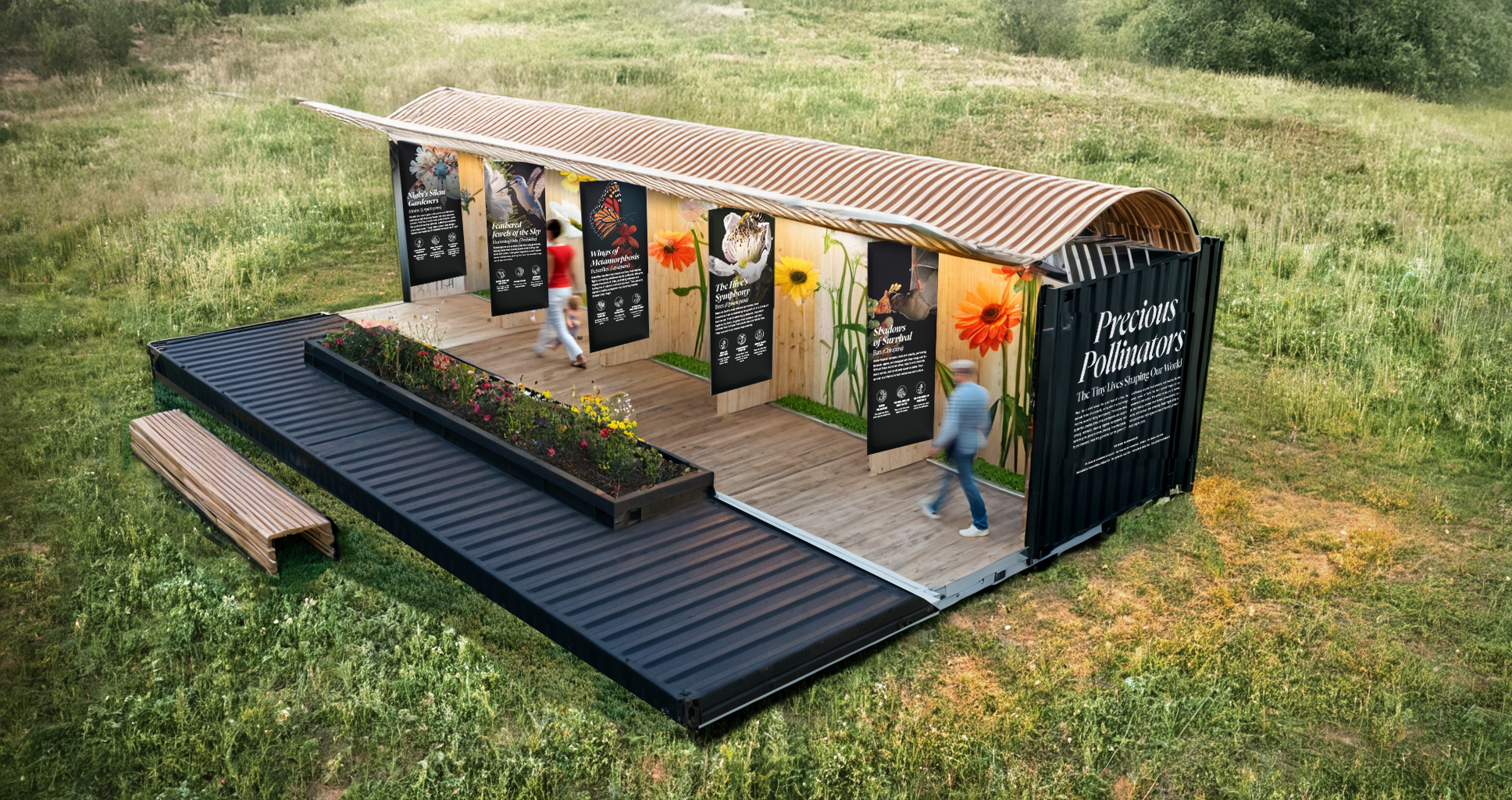
Pollinators are essential to every ecosystem, but it can be hard to empathize with creatures as small as bats, hummingbirds, or insects. This conceptual exhibit, imagined for the American Museum of Natural History, responds to that challenge with immersive design. What if we could inspire connection with even the tiniest beings?
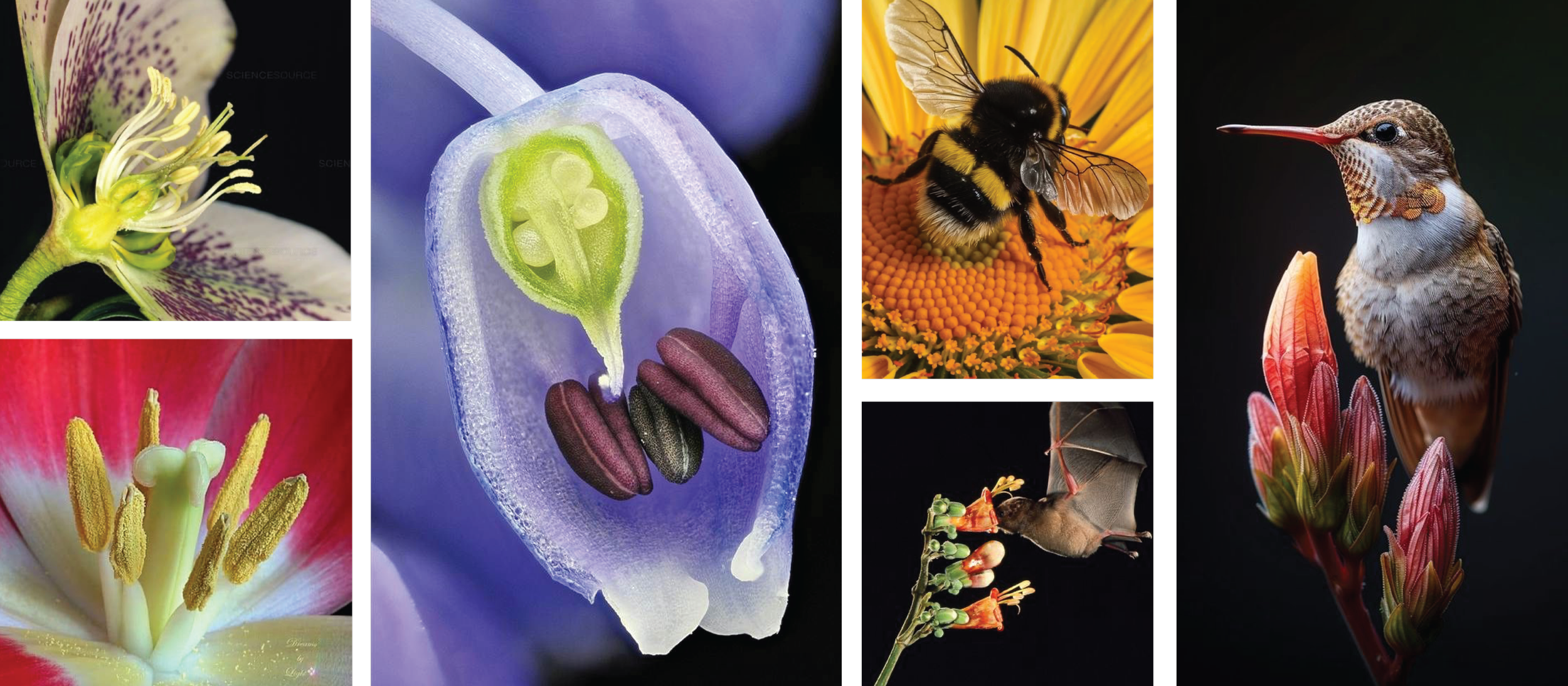

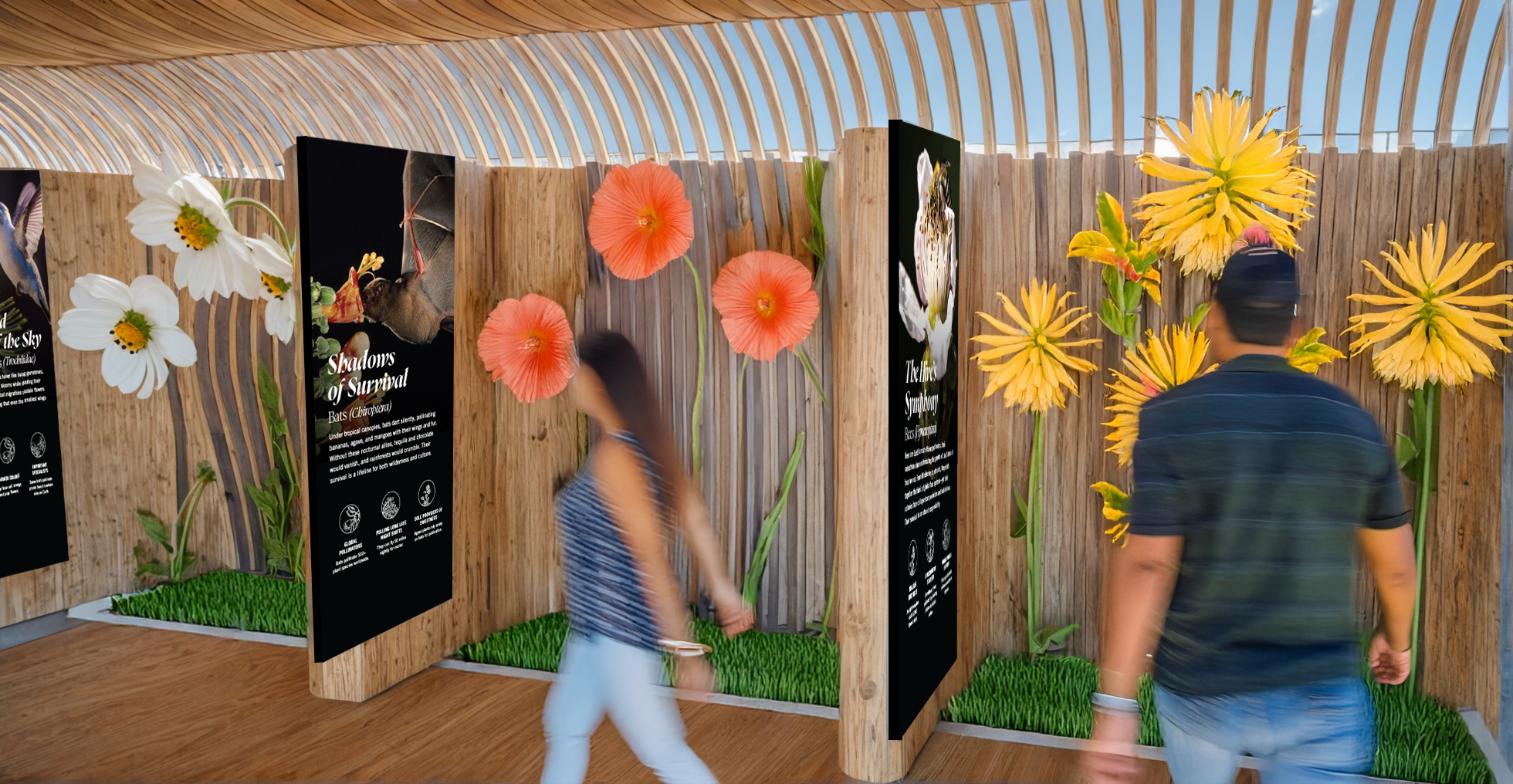
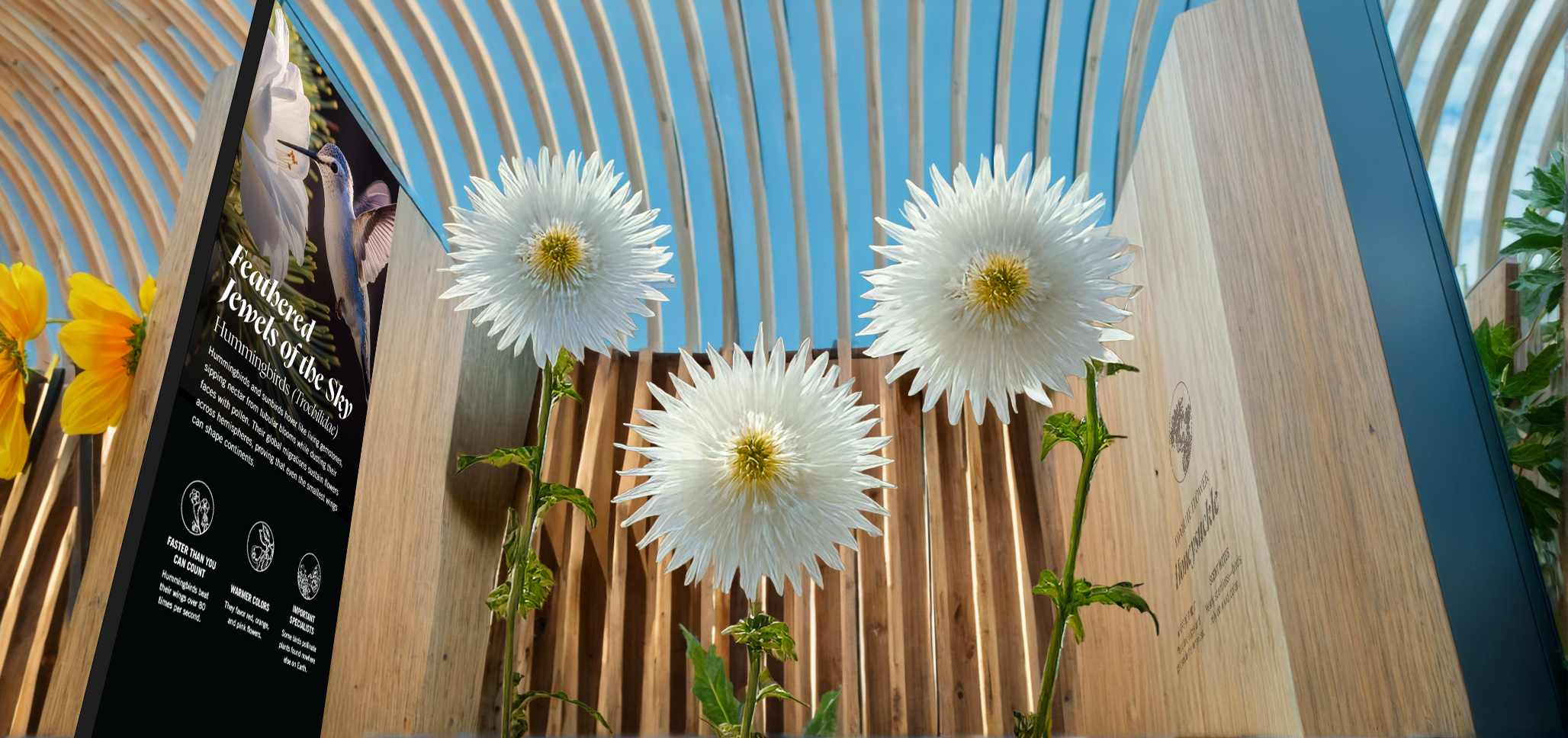
The idea was sparked by macro photography that reveals the intricate beauty of pollinators and the flowers they depend on. The challenge? Transform a standard shipping container into an immersive journey. Visitors would first encounter a wildflower garden, then step into a world scaled to a pollinator’s perspective, surrounded by oversized blooms that engage the senses. These flower sculptures doubled as scent diffusers, emitting fragrances native to the pollinators’ habitats.
The Challenge


Tall wood slats framed the space to amplify scale, making visitors feel small, like pollinators navigating a meadow. The slats also visually linked the interior to the exterior garden. A knocked-out wall was repurposed as flooring to maximize space. Materials like recycled wood and the container itself emphasized sustainability, while flowers crafted from wax-coated composites, paper, and fabric balanced delicacy and durability. Elegant typography and photography echoed the exhibit’s blend of science and art.
The Approach


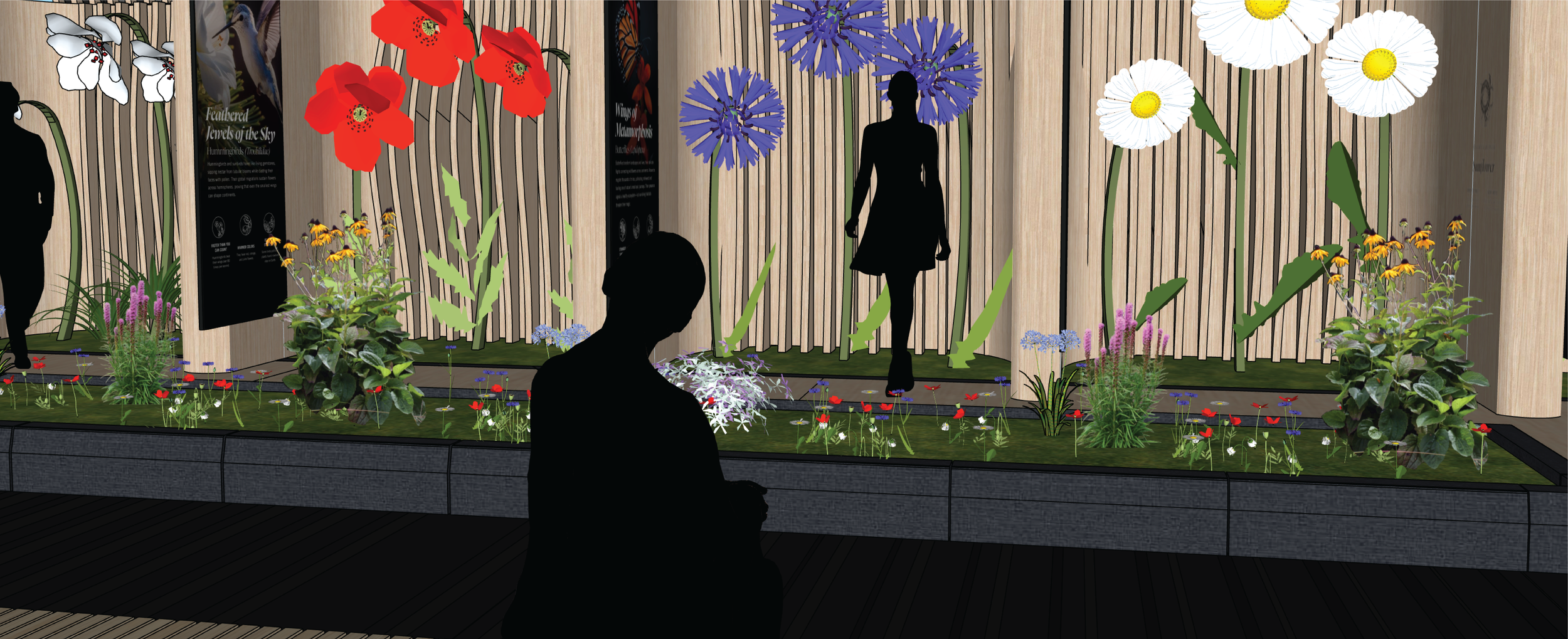


The space was planned in SketchUp for flow and functionality. Renderings used AI-generated Diffusion plugins and were finished in Photoshop to show how light, texture, and scale would come together, creating an imaginative, immersive experience rooted in the pollinators’ world.
Impact & Deliverables:
Developed a complete exhibition concept that translated the pollinator perspective into a buildable spatial design within shipping container constraints
Created a multi-sensory visitor experience combining visual scale manipulation, scent integration, and tactile material choices to foster empathy with small-scale wildlife
Produced comprehensive design documentation including spatial planning, material specifications, and photorealistic renderings that communicated the experiential concept to stakeholders
Final Results